The Underworld as a Mirror: Ryan Coogler’s Sinners, The Hero Twins, and the Decolonial Futurism of the Aztecverse
The year 2026 represents a threshold for global storytelling. We are living through a fascistic plunge into autocracy and authoritarianism, while at the same time voices of colors are being heard in new and amplified ways in an act of sheer resistance to colonialism and hatred. As I write this post, my communities are still reacting and pushing back against the murders of Keith Porter and Renee Nicole Good by ICE agents. The pain and the fear are fresh. Those of us who support human rights and democracy are not satisfied with the systems of oppression, so in the civic activism part of our lives we resist.
And in the world of art, audiences are no longer satisfied with stories that reduce POC and LGBTQ characters and their stories as tokens. Some filmmmakers, writers, and other creatives, are pushing back and telling new kinds of stories.
With the release of Ryan Coogler’s Sinners, we are witnessing the birth of a new mythic language—one that leans into the beliefs and veneration of African ancestors in order to destroy the structural lies of white supremacy and colonialism, while reclaiming the "full body" of ancestral memory. This movie threatens the status quo of Hollywood and its white lens. I am here for the change.
As a novelist and artist, my journey has always been defined by my quest to reveal “portals”, figurative and literal, where ancient gods and human consciousness can permeate through to the other side.
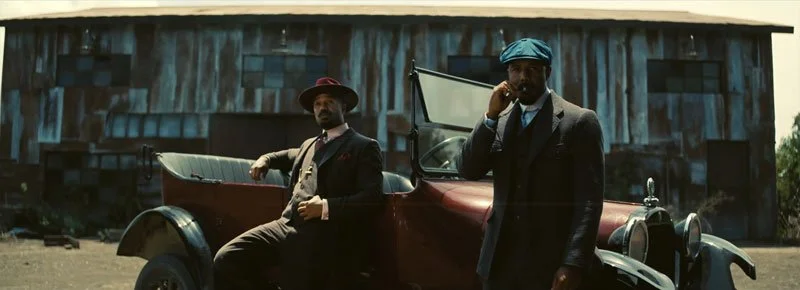
When I watched Sinners, I didn't just see a vampire film set in the 1932 Mississippi Delta. I saw a parallel ritual to my body of work. I saw the Delta transformed into a modern Xibalba (the Maya underworld), and I saw the "Smokestack Twins" as the living, breathing iterations of the Popol Vuh’s Hero Twins.
This essay is more than a review, and this review is not confined by the form of the essay. It is a map, and it’s also a digital artifact that is part of my novels in the Aztecverse. This post is an exploration of why Coogler’s Black POV and my own Mexican/queer lens in The Coil series are two sides of the same decolonial coin. Both works ask that we continue to cherish and listen to our roots and the voices of our ancestors as a way to build new stories that don’t just entertain, but also heal, while breaking free of systems of systemic oppression.
Part I: The Black POV as Political Resistance
Ryan Coogler has frequently stated that "the filmmaker has his duty to do his research." In Sinners, that research is not just historical but spiritual. The film presents a Mississippi Delta that is rooted in an "affirmation of full humanity," specifically through a Black point of view that refuses to blink in the face of racial predation.
The Sacred vs. The Secular: The Blues Epistemology
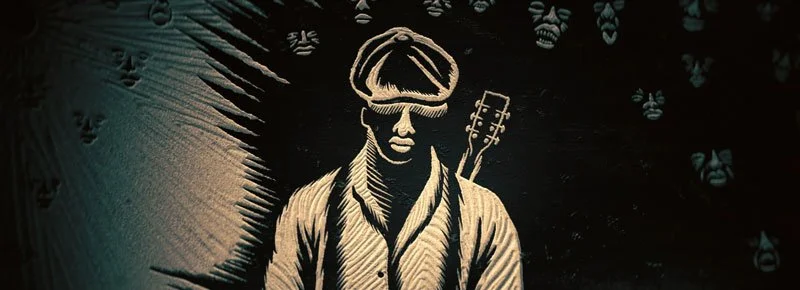
A central theme in Sinners is the tension between the "Edited Soul" of the church and the "Full Body" of the blues. Coogler captures a specific religious debate within the 1930s Black community: the role of secular music in the face of Jim Crow oppression. In a watershed interview, Coogler explained:
"The church is for the soul, but the blues music is for the full body. The soul and the flesh. It acknowledges the flesh and the pain that comes with a situation, the sexual desire, the anger. The whims of the flesh and the soul are acknowledged there. I think the music is an affirmation of humanity. It's a rebellion against the situation that these people were in... Whereas, the church is somewhat edited, the bad parts cut out."
This "blues epistemology" feels to me like a tool to pursue freedom. It is also a "conduit," a "map," and a "spirit in the dirt" that pushes against the logics of plantation power. In Sinners, the "Club Juke" isn't just a business; it is a safe haven—a space "For Us and By Us" where characters can be fully themselves.
This mirrors the bedrock of the Aztecverse. In 13 Secret Cities and 9 Lords of Night, the underworld of Mictlán functions as a place where characters can find deeper parts of their character and soul, and despite the horror stylings of the darkness of Mictlán, it aligns with the beneficial aspects of its lore. After all, the Mexicas believed every soul would take this hard journey through Mictlán when they died, and this experience of trial and atonement is free of white supremacy and hatred. Inside Mictlán and other realms of Aztec mythology, my characters discover and validate who they are, and not out of divine magic, but through a process of struggle and hardship of the soul. Like Coogler, my work seeks to offer "perspectives into worlds that people don't often get to see... from angles they don't often get to see." We both use the uncanny to restore dignity to bodies that have been historically erased or misrepresented.
The Film as an "Empathy Machine"
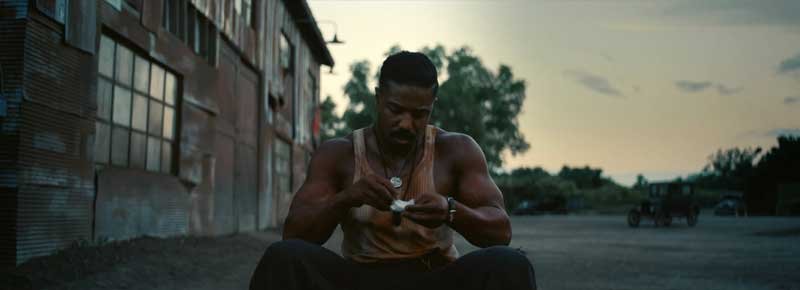
Coogler believes that movies are the "most powerful empathy machine in all the arts." By centering the narrative on two Black brothers, Elijah "Smoke" Moore and Elias "Stack" Moore, he forces the audience to "walk in somebody else's shoes" and see the South not as a relic of the past, but as a "contested geography of (re)ro(u)ting."
This is where the political resistance lies. It is an "affirmation of full humanity" against a system that seeks to reduce Black and Indigenous people to stereotypes. As Coogler noted:
"There's something powerful about seeing yourself as a hero... It says, 'You matter. You are enough. And yes, you can be the hero of your own story.'"
In a broader context, my own works provide a space where the characters can also see themselves as a type of hero, even if they don’t always identify with that heroism, like Roland’s journey in How to Kill a Superhero, or Clara in 13 Secret Cities.
Part II: The SmokeStack Twins and the Hero Twins of the Popol Vuh
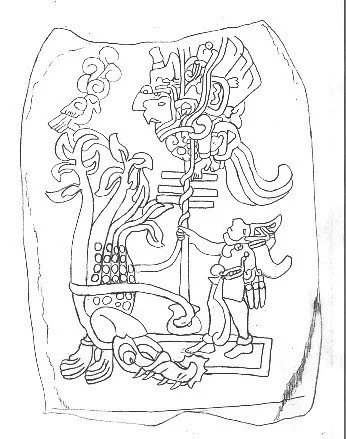
The Hero Twins shooting a perched bird demon with a blowgun. Izapa Stela 25.
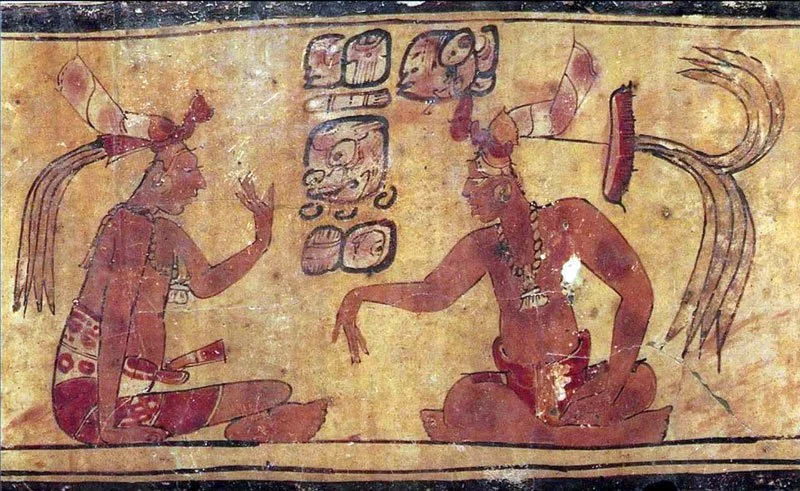
The most exciting parallel that I experienced in watching Sinners is the intentional dualism of the Moore twins. To the casual observer, they are twins played by Michael B. Jordan. To the student of Mesoamerican myth like myself, they are the modern incarnations of Hunahpu and Xbalanque—the Hero Twins of the Popol Vuh, the most famous mythological text of the Maya civilization.
Archetypal Dualism and the Underworld Trials
In the Popol Vuh, the Hero Twins are summoned to the Maya underworld, Xibalba, by the Lords of Death who are annoyed by the "ruckus" of their ball playing. Their journey is one of "sacrifice, resurrection, and the complex relationship between life and death." They succeed not through brute force, but through "wit and cunning," outsmarting the Lords in various "test houses" (Cold House, Jaguar House, Fire House).
In the Maya creation epic, the Popol Vuh, the Hero Twins, Hunahpu and Xbalanque, embark on a mythic quest that establishes the cosmic order by outwitting the lords of death in the underworld, Xibalba. After their father and uncle were defeated for playing a noisy ballgame above the underworld, the twins are summoned to face a series of lethal trials in "Houses" designed to kill them through cold, fire, and blades. Rather than using raw strength, the twins rely on divine trickery and magic—famously surviving their own intentional sacrifice and returning as traveling performers who can resurrect the dead. They eventually trick the underworld lords into wanting to be sacrificed themselves, only for the twins to refuse to bring them back to life, effectively breaking the power of death over humanity. Their journey concludes with their transformation into the Sun and the Moon, setting the stage for the creation of the first true humans from yellow and white maize.
The "Smokestack Twins" follow this exact mythic arc. As Chicago mob enforcers returning to their roots in the Deep South, their journey functions as a "Southern homecoming" into a realm of trial and systemic death.
The Physical Language of Myth
The level of detail Michael B. Jordan used to differentiate the twins is a masterclass in mythic physicality. They aren't just characters; they are opposing cosmic forces:
Smoke (Elijah): He is the "immovable force." Jordan chose to wear shoes one size too big for Smoke to feel "planted, rooted." His color is "Haint Blue," a traditional Southern Black color used for protection against spirits. Smoke is serious, pragmatic, and chooses his words wisely—much like the more grounded aspects of the Popol Vuh twins.
Stack (Elias): He is the "buoyant" one. Jordan wore shoes a half-size too small to ensure he was always moving, always "light on his feet." His color is crimson red, representing blood, energy, and the "struggle for freedom." Stack masks his pain with charisma, mirroring Xbalanque, the "trickster" who often saves his brother through wit.
In Maya thought, "even divinity was changeable." The twins are "alternate versions of the same person" or complementary forces required to restore balance to the cosmos. Just as the Hero Twins eventually ascend to become the Sun and the Moon, Smoke and Stack represent the reunification of ancestry (Smoke) and the persistence of lineage (Stack).
I also want to reference another parallel color dynamic in the color schemes of the Four Tezcatlipoca brothers in Aztec myth. Each of the four Tezcatlipoca gods is defined and differentiated sharply through color, behavior and essence, and in my Coil book series, the conflict between the Red Tezcatlipoca (who is mercurial, reactive, perhaps even entitled) sets the stage for him to clash with the Blue, White and Black Tezcatlipocas. If you’re new to Mesoamerican myth, please keep in mind that Maya and Aztec myths are their own unique pillars.
Part III: Vampirism as the Ultimate Colonial Trap
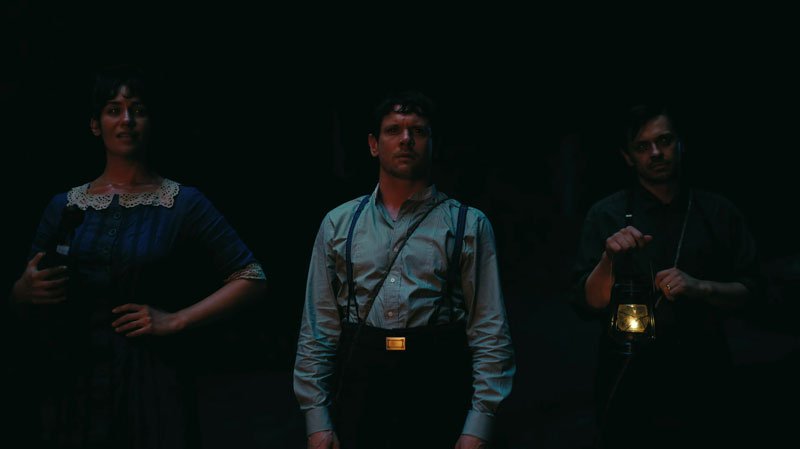
In Sinners, the vampire Remmick (Jack O'Connell) is more than a horror trope; he is a "political device." As an Irish vampire who has forgotten his own history of marginalization to become a "nocturnal predator," he represents the "insatiable greed" and "lust to possess what doesn't belong to them" that characterizes colonial forces.
The Lie of "Fellowship and Love"
Remmick offers the Black community "fellowship and love" in exchange for entry. This is a direct allegory for the "colorblind Christianity" that has historically demanded assimilation from African and Indigenous peoples in the Americas for the past five centuries. Remmick doesn't want the community to sing the blues; he wants them to sing his songs. Joining him means renouncing who they are. Joining him means that the POC characters consent to being colonized.
This is the true horror of the film: the loss of the soul to a system that promises eternal life but delivers only "vampiric violence." The vampires are "minorities that have literally lost their humanity" in favor of power—a metaphor for "homegrown fascism."
The Resistance of Ancestral Knowledge
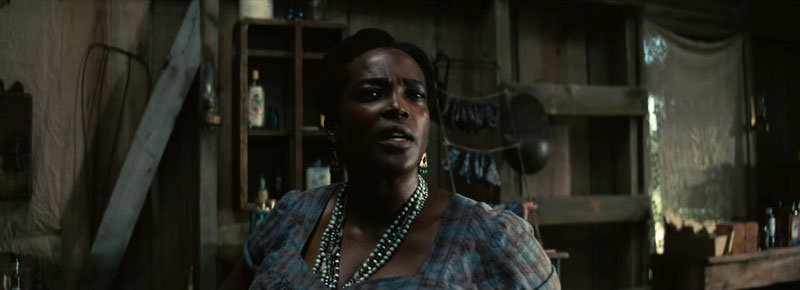
Against this colonial trap, Coogler positions Annie (Wunmi Mosaku), a Hoodoo practitioner. Annie represents the survival of African spiritual practices, epistemologies, and worldviews against the violence of slavery. Her "magic" is a lens that views death not as an end, but as a "transitional state."
In my Aztecverse, we find many characters with powers like Annie’s. The trans character Delfina in Transformation Fetish is one of the most powerful shamans in the tetralogy, and she is able to channel the knowledge of the Aztec gods in ways that help Roland, her figurative brother, to achieve his own self development. Jose Maria Montes, the precocious punk teen in 13 Secret Cities, has abilities of shamanism that come naturally to him, and they are a direct response to the colonialist and authoritarianism of white supremacy in the world of the novel, even if Jose Maria is too young yet to really identify himself as a shaman. La Negra, a mysterious character also in 13 Secret Cities, also holds power and ancestral knowledge, yet many of her own blood relatives dismiss her as being “too Mexican” or eccentric and superstitious, yet she is a visionary who represents the survival of the Montes’ family’s indigenous roots in the state of Veracruz. In 9 Lords of Night, ancestral knowledge does not show a human form. Instead, it’s the creature Tecolotl who functions as a direct portal to Nestor and Felix’s ancestral past, and in that sense, Tecolotl provides an answer to colonialism and the spiritual decay of the 21st century. Tecolotl is yet another portal in the form of a smoky metaphor with wings of smoke. In the upcoming book Our Lord of the Flowers, the resistance to ancestral knowledge shows up in the form of a deadly hoard by Sir Vitrum’s late father. This hoard exists in direct opposition to access to ancestral wisdom. It’s a physical force, a type of labyrinth that not only threatens to suffocate the ancestors, but one which can also kill characters who refuse to listen to the songs of the ancestors.
These parallels are the reason why Sinners connected so deeply with me. The film is very clear in its intentions to break the linearity of time, particularly in the scene when the Juke Club invokes ancestors and future descendants simultaneously to sing and dance. That moment is a defiance to the world of capitalism, techno-feudalism and exploitation that we live in. It’s also accessible to anyone who chooses to really listen. That is so close to the ways in which my own characters touch the ancient. I feel deep respect for this film and I find it reaffirming, even if I may never get a chance to meet Ryan Coogler or his team.
In my work, the characters do not just fight monsters; they interface directly with the Aztec gods to discover deeper truths. Whether it's the Hoodoo of the Delta or the Aztec rites of Mictlán, we are both arguing that our only hope for freedom lies in the "unbroken threads" of our heritage.
Part IV: The Mexican Lens—The Aztecverse and The Coil
While Sinners centers the Black experience, The Coil series approaches the same decolonial struggle through a modern Mexican and queer lens.
Parallel Underworlds: Mictlán, Xibalba and the Delta
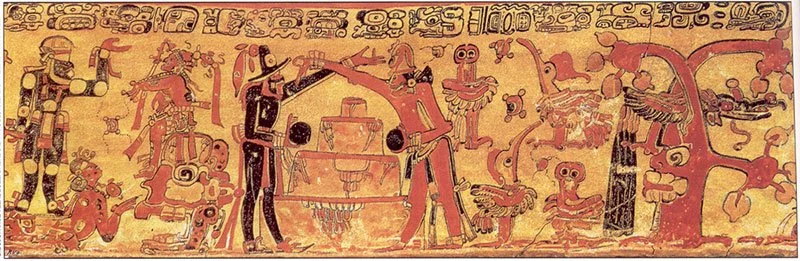
The Hero Twins as ball players
In 13 Secret Cities, Clara Montes discovers the underworld of Mictlán hidden beneath the streets of Chicago. Just as Smoke and Stack return to the Mississippi Delta to face "ghosts that never truly left," Clara must face the ancient Aztec gods of death in order to atone, grow, and become wiser.
My work examines "the decay of democracy in the United States" through mythic scale. The "Nine Lords of Night" in my books are the equivalents of Coogler’s vampires—they are the ancient, hungry powers that demand a "final sacrifice" from a population that has forgotten how to pray.
Part V: Stepping Through the Portals—The Future of the Aztecverse
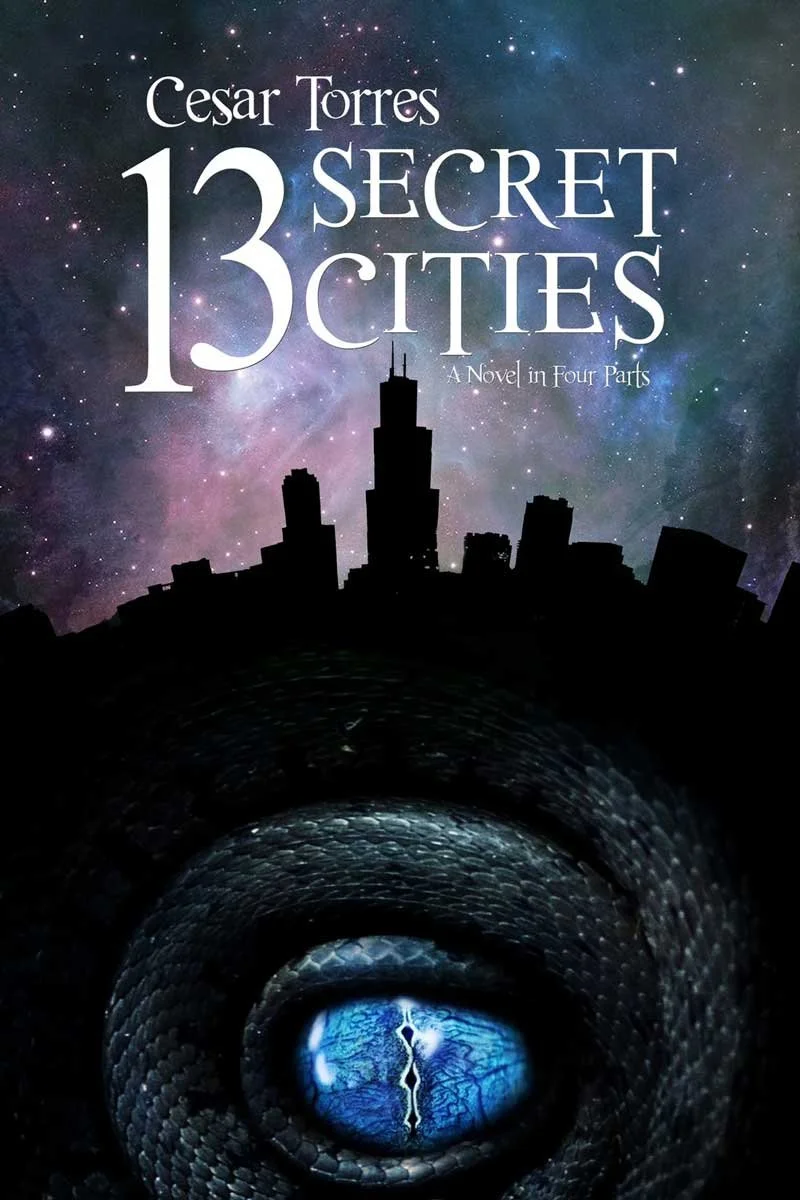
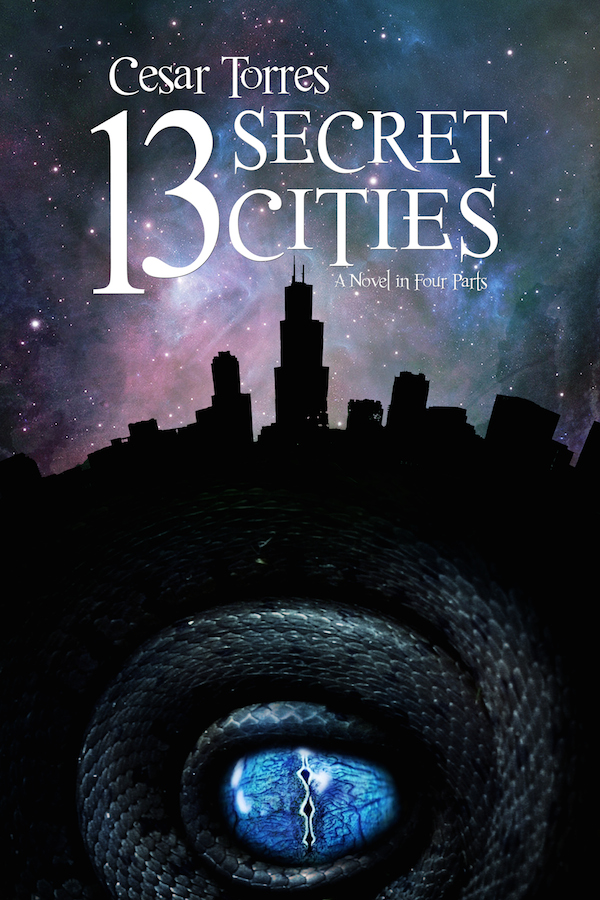
13 Secret Cities by Cesar Torres
As we look toward the final chapter of The Coil trilogy, Hall of Mirrors, the parallels with Sinners only grow deeper. Idyllic family life is disrupted by the fall of a preexisting world order, and a "final sacrifice" is demanded.
Entering The Coil: A Ritual for 2026
If Sinners left you "out of breath," if you felt the power of seeing the marginalized body become "divine," then you are ready for this series.
Book I: 13 Secret Cities: Enter the underworld. Discover the Mictlán beneath Chicago and see how one woman’s awakening becomes a rebellion against the gods themselves.
Book II: 9 Lords of Night: Witness the veil break. The book shifts point of view as we join trans police detective Nestor Bunuel as he investigates a murder that may or may not be connected to an ancient Aztec ritual of human sacrifice. The book exists in a United States that is decaying and becoming even more fascistic than before. As the supernatural and the political collide, you will see the true cost of living in a country that has lost its soul.
Book III: Hall of Mirrors (Arrives in 2026): In this third volume of the Coil, Nestor takes his own journey into the heart of the serial killer Steven Puttock, and into the depths of Mictlán, even as Chicago is placed under martial law.
A Shared Act of Resistance
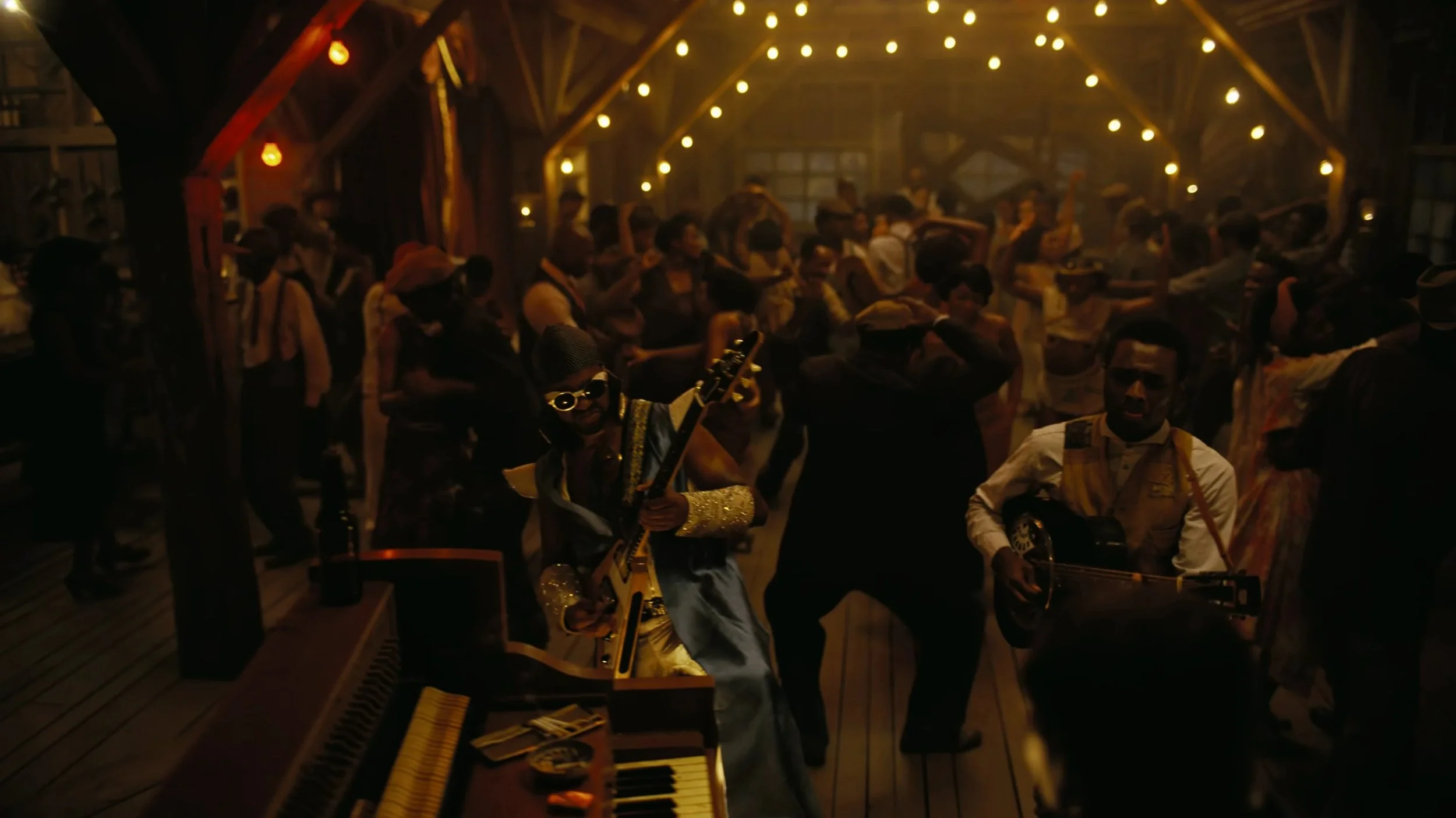
Ryan Coogler famously said: "I wanted to tell epic stories... for people who look like me and people I grew up with."
Guess what? So do I. This is why I chose to be an indie author, free of the constraints of the white cis lens of traditional New York publishing. This is why I constellated my books with characters whose sexual and gender identities actually matter as part of who they are. This is why I center characters of color. It’s why I write about dense mythologies that force the reader to do their own hard work to understand and learn a bit more about Mexico and its rich pre-Colombian myths and belief systems. I want to see people of color and queer people to see themselves reflected in my books with a lot of dignity and respect for who we are.
I highly recommend that you watch Sinners. Relish its story. If you’re a person of color, seek more artists who are making stories like this one. If you’re an ally, please ask questions about movies like Sinners with curiosity and please challenge your own assumptions. Above all, have fun, let the story soak you with its beauty. And don’t be afraid to say that this film is anti-colonialist. Colonialism isn’t a phase of the past that happened in history books. It continues and thrives today, and it’s our job to use our communities and our art to fight back against it. To reclaim what has been taken from us. But also to give a lot back, and reinforce the ways in which we can be stewards of the land, protectors of living things, and creators of beautiful art. We can connect to our ancestors, if we choose to listen, and if we re-tell the stories that show us how to find them.
Works Cited
Maya Hero Twins: Hunahpu and Xbalanque | Research Starters - EBSCO, accessed January 11, 2026, https://www.ebsco.com/research-starters/literature-and-writing/maya-hero-twins-hunahpu-and-xbalanque
Sinners (2025 film) - Wikipedia, accessed January 11, 2026, https://en.wikipedia.org/wiki/Sinners_(2025_film
Popol Vuh | Definition, Summary & Characters - Lesson - Study.com, accessed January 11, 2026, https://study.com/academy/lesson/popol-vuh-summary-characters-analysis.html
Redalyc.Fighting the gods: the Popol Vuh (or why the Conquest of México could not repeat itself with the Maya), accessed January 11, 2026, https://www.redalyc.org/pdf/384/38401408.pdf
Popol Vuh | Encyclopedia.com, accessed January 11, 2026, https://www.encyclopedia.com/history/latin-america-and-caribbean/mesoamerican-indigenous-peoples/popol-vuh
Soundscapes | Sounding Out!, accessed January 11, 2026, https://soundstudiesblog.com/category/soundscapes/
How Long Should a Blog Post Be? The Best Length for 2026 - SEO.com, accessed January 11, 2026, https://www.seo.com/blog/how-long-should-a-blog-post-be/
Ryan Coogler's “Sinners” Is a Cultural Masterpiece and a Mythological Call to Action | by Khalid Abdulqaadir | Medium, accessed January 11, 2026, https://medium.com/@khalid_A-Z/ryan-cooglers-sinners-is-a-cultural-masterpiece-b6498272b433
Press & Media Kit – Cesar Torres | Queer Futurist, Entrepreneur and Artist, accessed January 11, 2026, https://cesartorres.me/pages/press-media-kit
13 Secret Cities | The Coil Series by Cesar Torres, accessed January 11, 2026, http://www.13secretcities.com/
Race | Sounding Out!, accessed January 11, 2026, https://soundstudiesblog.com/category/race-2/
Why is Sinners Breaking Box Office Records? - good.film, accessed January 11, 2026, https://good.film/guide/why-is-sinners-breaking-box-office-records
Sinners Director Ryan Coogler on the Parallels Between the Blues and Irish Music and Loving His Vampire Villain - IGN, accessed January 11, 2026, https://www.ign.com/articles/sinners-director-ryan-coogler-on-the-parallels-between-the-blues-and-irish-music-and-loving-his-vampire-villain
15 Great Ryan Coogler Quotes for Writers & Filmmakers - Industrial Scripts, accessed January 11, 2026, https://industrialscripts.com/ryan-coogler-quotes/
The Maya Hero Twins, https://www.latinamericanstudies.org/hero-twins.htm
Acknowledgments
Special thank you to the team at StillsLab for access to stills from the film Sinners. Stillslab offers their services for creatives and publishers like myself, and I encourage you to give them support.